
 LV
 EN
 RU
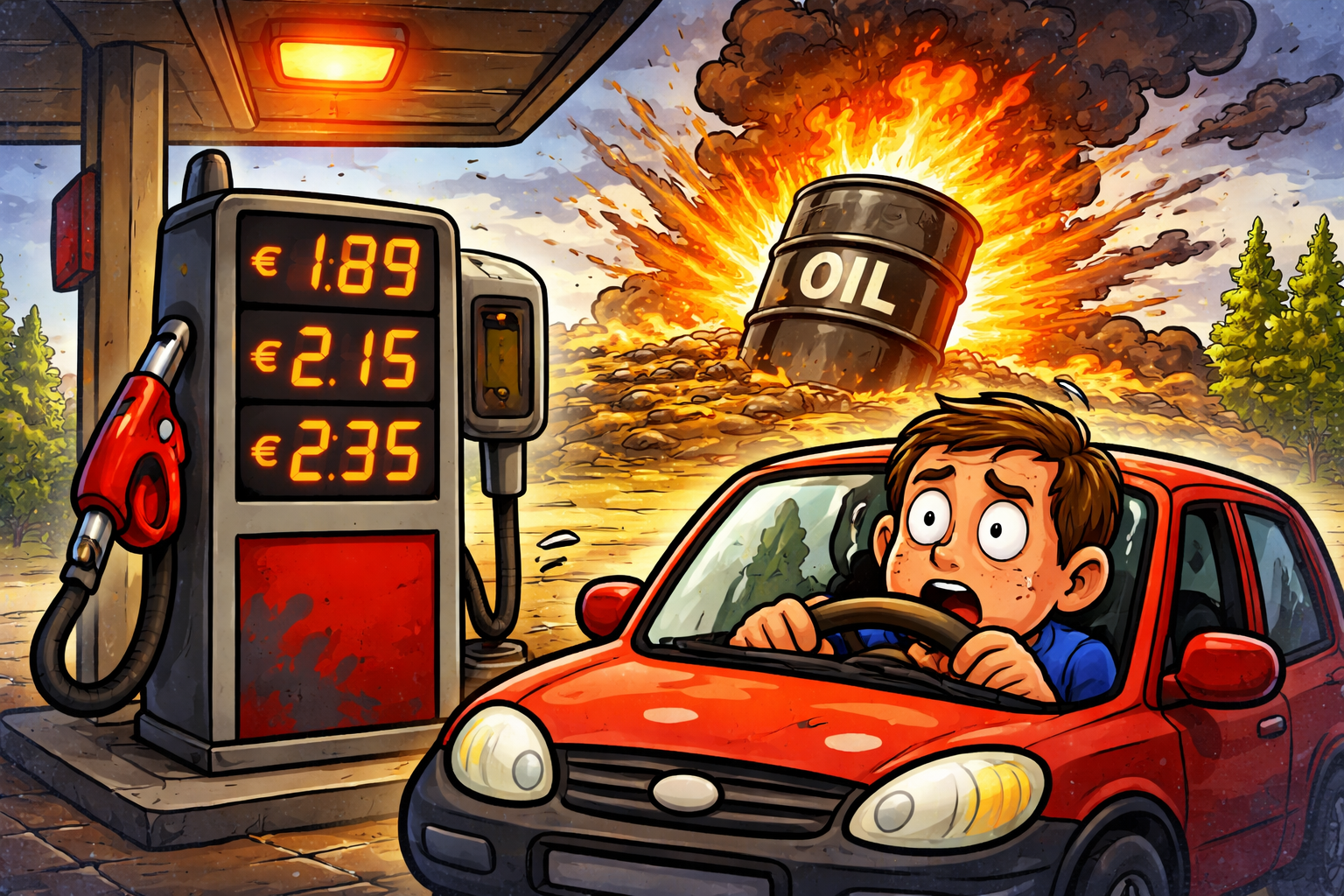
There are questions drivers ask again and again, and one of the most honest is also one of the most tired: how long is this going to continue? How long will fuel prices keep jumping upward, easing a little, then rising again, leaving people with the feeling that they are living not in a normal market, but in a permanent state of fuel-price anxiety? This is not only an emotional question. It is a very practical one. It is about monthly budgets, route planning, car choices, family costs, work commutes, and the simple desire to feel that life has become predictable again.
The problem is that fuel-price volatility cannot be understood by looking only at the number on the station board. That number shows the result, not the cause. Behind it sits the global oil market, shipping routes, OPEC+ decisions, sanctions, military risks, weather disruptions, currencies, refining capacity, logistics, Europe’s dependence on imported energy, and also something less visible but very powerful — market psychology. That is why fuel prices often feel so personal and so irrational at the same time. They are local in effect, but global in origin.
This article is not a crystal-ball forecast. It is something more useful. It is an attempt to understand why volatility happens, why it can continue for much longer than people hope, why Latvia feels it so sharply, why prices do not always move in the simple direction people expect, and what kinds of global conditions can keep the market unsettled even when there is no single dramatic shock dominating the headlines.
Why fuel prices behave so nervously in the first place
From the outside, it can seem as if fuel price is just a technical reflection of crude oil price. Oil goes up, fuel goes up. Oil goes down, fuel goes down. Real life is much messier than that. The oil price itself is already the result of a nervous global system. It reacts to supply, demand, production strategy, shipping risks, political signals, sanctions, export obstacles, and even to fears about what might happen, not just what has already happened.
That means price volatility is often not random hysteria at all. It is the natural behavior of a market that lives under constant pressure. If supply looks secure, prices may soften. If the market begins to fear disruptions, conflict, policy shifts, or transportation bottlenecks, prices respond quickly. That is why the fuel price ordinary drivers see can feel so unstable — because the raw material market behind it is also unstable.
And this is exactly where frustration often begins. Drivers want a simple explanation. Markets rarely give one. Instead, they give a moving target made up of overlapping risks, shifting expectations, and constantly revised assumptions about what happens next.
Global events are not “far away” — they travel directly to Latvia’s pump price
To many people in Latvia, it can feel absurd that an event in another part of the world could affect the cost of filling up the family car. But that is exactly how energy markets work. If there is a disruption to shipping, if key exporters reduce or redirect production, if sanctions complicate flows, if major producers make strategic moves, or if military tension creates fear about future supply, all of that feeds into global pricing almost immediately.
And Latvia does not sit outside this system. It is not a separate island with its own independent oil reality. Latvia lives inside the broader European energy space, and Europe remains heavily exposed to imported energy. That means what happens in global oil and product flows does not stay abstract. It eventually appears in the wholesale environment that shapes the pump price at home.
This is one of the hardest things for people to emotionally accept: the number they see at their local fuel station may be determined as much by distant geopolitical stress as by anything local. The price feels personal, but the causes are often international, strategic, and far beyond the horizon of daily life.
Why volatility can continue even without one giant crisis
Many people intuitively think like this: if there is a war, a major attack, a supply collapse, or an OPEC+ shock, then of course prices will swing. But if there is no single giant crisis anymore, everything should calm down. Real markets do not work that neatly. Fuel-price volatility can continue for a long time even without one dramatic event dominating the whole picture. All it takes is a combination of medium-sized risks, uncertain demand signals, political unease, and a market that is constantly adjusting expectations.
This is often the most exhausting kind of environment for drivers. There is no one clear date when everything “ends.” There is no single political decision that restores stability. Instead, there is a world in which markets repeatedly tighten, relax, worry, calm down, and then worry again. That kind of market can remain volatile for much longer than people expect precisely because it is not driven by only one event. It is driven by a climate of uncertainty.
In practical terms, that means temporary price relief does not necessarily mean the underlying instability has disappeared. It may simply mean that, for a moment, one side of the global balance looks less threatening than the other.
OPEC+ still sits near the center of the market’s nervous system
Even if OPEC+ sounds abstract to ordinary drivers, it remains one of the most important mechanisms shaping the mood of the global oil market. If production cuts remain in place, are unwound, or are modified, the market reads that as a signal about future supply. If it begins to expect more oil, prices can soften. If it suspects tighter control over supply or greater exposure to disruption, prices can become more reactive again.
This matters because fuel-price volatility in Latvia can continue even without any dramatic local development at all. It is enough for the market to keep reassessing how much oil will really be available in the months ahead. In other words, the visible local price may look ordinary, but the nervous system behind it is global, strategic, and highly sensitive to production expectations.
That is why seemingly technical announcements about output targets or production discipline can ultimately affect the daily life of someone simply trying to budget for commuting, family travel, or work expenses in Latvia.
Europe’s import dependence means we do not choose volatility — we inherit it
This may be the most important point in the whole article. Latvia can analyse prices, monitor competition, discuss tax policy, and maintain strategic reserves. But it cannot disconnect itself from the broader European energy reality. As long as Europe remains strongly dependent on imported fossil energy, it remains vulnerable to outside shocks. That vulnerability is not theoretical. It is built into the structure of the market itself.
What that means in practice is simple but uncomfortable: as long as Europe imports a large share of the energy products that shape transport costs, Latvia will remain exposed to global instability. Not necessarily in a dramatic, explosive way every week — but often enough for the effect to be real, visible, and emotionally exhausting. In that sense, volatility is not something Latvia chooses. It is something Latvia inherits through the wider energy system it is part of.
That is also why the answer to the question “how long can this continue?” is unfortunately not short. It can continue for as long as the external environment remains fragile and the underlying dependence on imported fossil energy remains high.
Why prices can fall without stability returning
There is another psychological trap here. People often assume that if prices become lower for a while, the problem must be ending. But prices can fall inside an unstable environment too. If global supply improves, if demand softens, if inventories rise, or if some risks ease temporarily, prices may come down. That does not automatically mean the system behind them has become stable.
This is exactly what makes volatility so draining. Even when drivers finally see some relief, they often do not trust it. And very often they are right not to trust it completely. If geopolitical risks, export restrictions, shipping concerns, or strategic production decisions remain alive in the background, then any price relief may turn out to be temporary rather than structural.
So lower prices and a calmer market are not the same thing. A market can feel temporarily kinder while still remaining fundamentally unstable underneath.
Latvia feels volatility especially sharply because fuel prices are so visible
There is also a human layer to all of this. Fuel-price changes do not feel the same as many other price changes in daily life. They are unusually visible. They are on large signs. They return every refill. They are linked directly to movement, freedom, work, family routines, and travel plans. That makes them psychologically heavier than many other costs, even when the underlying economics may be more gradual than people feel in the moment.
In Latvia, drivers often experience these changes very personally. A fluctuation is not just an abstract number. It is the commute to work, the school run, a planned weekend trip, a delivery schedule, or the simple monthly calculation of whether the budget still holds together. That is why even moderate instability can feel larger than it would look in a technical report.
And that is why the question “how long will this continue?” really means more than just a market question. It also means: how long will people have to live without a strong feeling of predictability in one of the most visible parts of everyday spending?
Can the government fully stop this volatility?
No — not fully. A government can influence some parts of the final price. It can review tax policy, strengthen oversight, examine excess-profit concerns, maintain strategic reserves, and discuss measures to soften pressure on households and businesses. But it cannot unplug Latvia from the global oil market.
That means local policy tools usually work more like shock absorbers than like a total cure. They may soften the blow, improve transparency, or reduce some pressure. But they do not eliminate the deeper cause of the volatility. That cause lies in the global structure of oil supply, trade, and geopolitical risk.
So any serious answer has to stay honest: local governments can influence how painful volatility feels, but they cannot fully prevent volatility in a world where the energy system remains globally exposed.
The smartest conclusion for drivers
If all of this is put together, the most useful conclusion is uncomfortable but practical. Fuel-price volatility in Latvia may continue for quite some time — not necessarily because one giant new shock is guaranteed, but because the global energy environment remains fragile, Europe remains exposed to imported energy, and oil markets continue to live under geopolitical tension and strategic uncertainty.
At the same time, that does not mean the direction will always be upward. There may be periods of relief. There may be softer price phases. There may be moments when supply looks healthier and markets become less tense. But that is not the same thing as a permanent return to stability.
That is why the smartest driver does not wait for one magical moment when everything finally becomes normal again. The smartest driver adapts to an environment that may remain changeable. That means understanding personal fuel use, planning more intelligently, questioning whether the current car still fits real life, and avoiding the illusion that one cheaper week means the system is suddenly safe again.
Conclusion
How long could fuel price volatility continue in Latvia? The honest answer is: longer than people would like, because it is sustained not by one single event, but by the wider structure of the global energy system — supply risks, OPEC+ strategy, export disruptions, Europe’s dependence on imported energy, geopolitical uncertainty, and market psychology all at once.
At the same time, volatility does not mean prices will only rise. There can be softer periods, especially if global supply remains stronger and some pressure eases. But that still is not the same thing as true stability. And that is the key difference drivers need to understand if they want to make calmer, smarter decisions in an unsettled market.
If you want to understand what your driving really costs under different fuel-price scenarios and how volatility affects your daily budget, use the calculator below.