
 LV
 EN
 RU
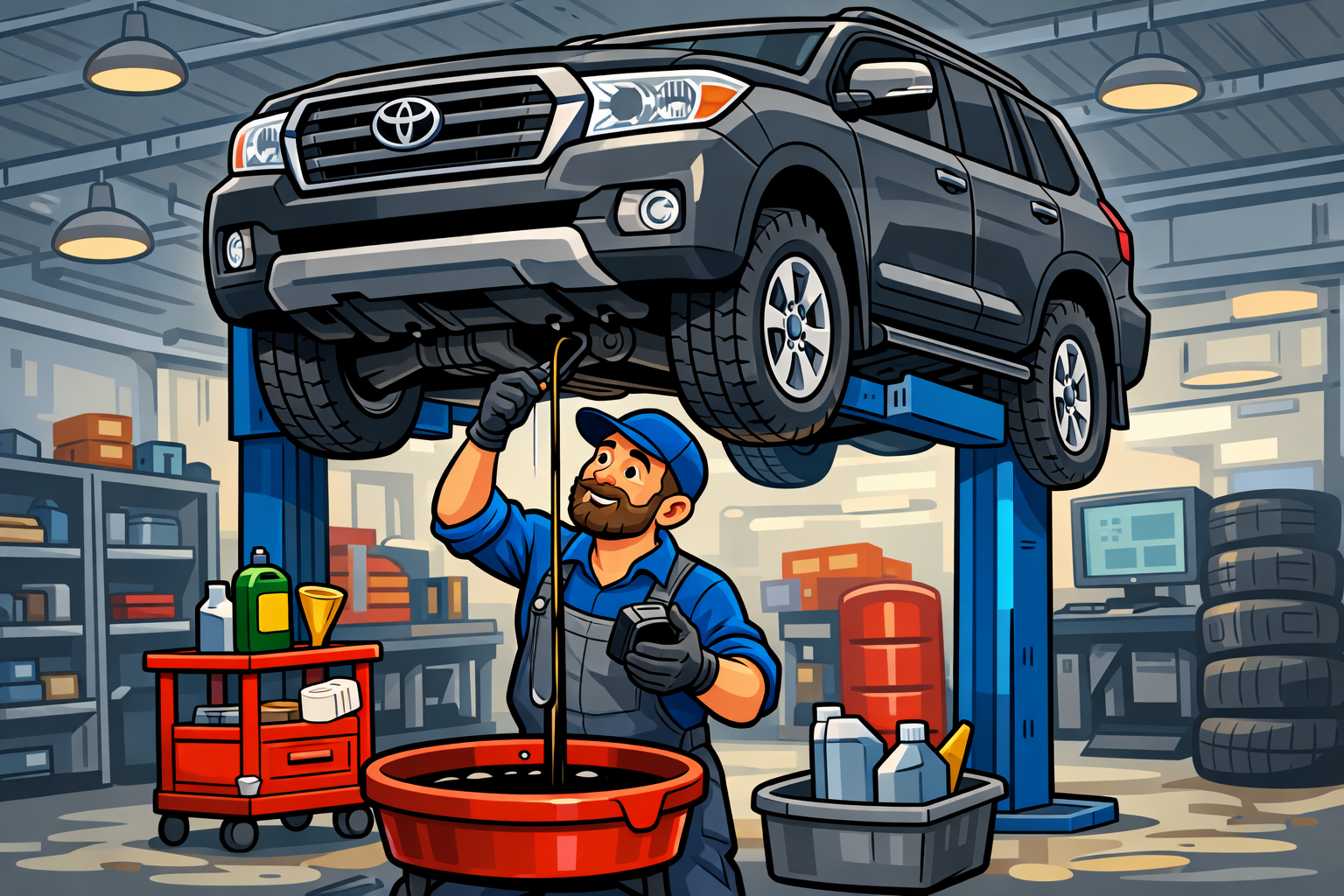
Changing engine oil is one of the most important regular maintenance tasks a car owner can do for the health of the engine. And yet, it is also one of the topics that causes the most confusion. Some people change oil very often just to be safe, others follow only the maximum service interval, and some wait until a reminder appears on the dashboard. As a result, the obvious question comes up again and again — how often should engine oil actually be changed?
The answer is not exactly the same for every car. It depends not only on the interval set by the manufacturer, but also on driving style, daily routes, engine type, climate conditions, and the age of the vehicle itself. What may be acceptable for one car can be too long for another. This is especially true for vehicles that mostly drive short distances, spend a lot of time in traffic, or operate under heavier load.
In this article, we will look at how often engine oil is usually changed, what affects oil change intervals, the most common misconceptions, and how to recognize when an oil change should not be delayed. The goal is to help drivers make a practical decision, not just a theoretical one.
Why engine oil is so important
Engine oil is not just a liquid that happens to be inside the engine. It lubricates moving parts, helps reduce friction, carries away heat, protects against wear, and helps keep the engine cleaner. Without proper lubrication, engine components wear much faster, and oil that is too old or unsuitable can no longer do its job properly.
Over time, oil loses its properties. It becomes contaminated with combustion by-products, moisture, soot, and microscopic metal particles. The longer oil stays in the engine, the worse it becomes at protecting it. That is why regular oil changes are not just a formality — they are a direct investment in engine longevity.
| Conditions | Does oil wear out faster? | What it means |
|---|---|---|
| Short city trips | Yes | More frequent oil changes may be needed |
| A lot of highway driving | Usually less | Oil works in more stable conditions |
| Turbo engine | Often yes | Good oil quality and interval matter a lot |
| High mileage and older car | Often yes | Oil level and condition should be checked more carefully |
How often should engine oil usually be changed?
The first thing to check is always the manufacturer’s recommendation. Many cars have oil change intervals defined by mileage, time, or both. For example, it may be every 10,000, 15,000, or 20,000 kilometers, or once a year, whichever comes first.
In real life, however, many workshops and experienced drivers believe that very long intervals are not always ideal in everyday use. This is especially true for cars that mostly drive in cities, cover short distances, and often do not operate in fully optimal temperature conditions.
That is why the theoretical maximum is not always the best long-term strategy. For many vehicles, changing oil a bit earlier is safer than driving all the way to the limit.
Why “once a year” is still often a good idea
Even if a car does not cover many kilometers in a year, oil still ages. Moisture, temperature fluctuations, and short trips affect oil quality even when mileage stays low. That is why, for many car owners, changing oil once a year is a very sensible and safe rule.
This is especially true for people who mostly drive in town, start the engine cold frequently, and cover short distances. In those conditions, oil often ages not because of mileage, but because of time and how the car is used.
If a car is used rarely, that does not mean an oil change can be postponed indefinitely.
Short trips wear oil out faster than many people think
One of the most important factors is how the car is used every day. If the engine is mostly used for short trips, such as a few kilometers to the shop, school, or work, it often does not have enough time to fully warm up to its ideal operating temperature.
In these conditions, more moisture and combustion by-products build up in the oil, which speeds up deterioration. That is why a car used mostly for short trips often deserves more frequent oil changes than one that regularly does longer highway drives.
Many people mistakenly think that low mileage automatically means less stress for the oil. In reality, the opposite is often true.
City driving is a harsher environment than it seems
Cars that spend a lot of time in city traffic, congestion, and slow-moving conditions often operate under tougher circumstances than people realize. The engine spends more time idling, accelerating, and slowing down, and the oil has to deal with greater thermal and mechanical stress.
That is why the same mileage in city driving and highway driving is not equal from the oil’s perspective. 10,000 kilometers on calm highway journeys is often easier on oil than 10,000 kilometers of short, stop-and-go urban driving.
If your car’s life mostly happens in the city, long oil change intervals should be treated with caution.
Oil matters even more in turbo engines
Turbocharged engines are often more sensitive to oil quality and oil change frequency. A turbocharger operates at very high temperatures and very high rotational speeds, which means it depends heavily on good lubrication.
If the oil is old, contaminated, or does not meet the correct specification, it can affect not only the engine itself but also the longevity of the turbocharger. That is why owners of turbocharged cars should not treat oil changes casually.
Here, not only the interval matters, but also using the correct oil specification.
Diesels and high-mileage cars have their own specifics
In diesel engines, oil is affected by soot, combustion characteristics, and sometimes the operation of the DPF system. That means oil quality and oil change timing are especially important. If a diesel is mostly used for short trips, the oil may lose its protective qualities faster than the driver expects.
Older cars and vehicles with higher mileage also usually require closer attention to both oil level and oil consumption. If the engine already has some wear, driving too long with old oil certainly does not help.
In such cases, a more conservative oil change interval is usually safer than trying to stretch it as far as possible.
Is the oil change reminder always the full truth?
Many modern cars display an oil service reminder or calculate the service interval automatically. This is a useful feature, but it should not always be treated as the only and absolute truth. These systems are based on logic and calculations, but they do not always perfectly reflect every real-world driving condition.
If a car is used in harsh conditions, takes frequent short trips, or spends a lot of time in traffic, the actual load on the oil may be greater than the standard calculation assumes. That is why the dashboard reminder is a good guide, but not always the final answer.
It is wiser to combine the manufacturer’s recommendation with a realistic understanding of how the car is actually used day to day.
Signs that you should not delay an oil change
There are situations where it does not make sense to wait until the official interval. If the oil level changes more often than before, the engine starts sounding louder, feels heavier in cold weather, or the car has recently been used under tougher conditions than usual, changing the oil earlier may be a smart decision.
Likewise, if the car has been driven only a little but the oil has already been sitting in the engine for many months, there is little point in delaying unnecessarily. Sometimes the safest decision is simply to change it and move on.
An oil change usually costs far less than the consequences of running an engine too long on oil that is too old.
Why you should not judge oil only by its color
Many drivers try to judge oil condition by its color. This can give a very rough impression, but it is not a reliable way to decide whether the oil is still good. Diesel oil in particular can become dark very quickly, and that does not automatically mean it is already unusable.
At the same time, oil that still looks relatively normal does not always mean its protective properties are still ideal. That is why relying only on visual appearance is not the best approach.
It is much safer to follow a sensible interval and the correct specification rather than trying to judge everything by eye.
The correct oil matters as much as the correct interval
Even frequent oil changes will not help fully if the wrong oil is used in the engine. Every car has manufacturer requirements for viscosity and specification. These are not just formal details — they are directly connected to the way the engine was designed.
Using the wrong oil can affect lubrication during cold starts, protection at high temperatures, and overall engine performance. That is why it is always important to know not only when to change oil, but also exactly what oil to use.
If you are not sure, it is better to check the owner’s manual or ask a trusted workshop.
What drivers can do themselves between oil changes
Between oil changes, it is worth checking the oil level regularly. It does not take much time, but it can help detect increased oil consumption or possible issues early. This is especially important for older cars, turbo engines, and high-mileage vehicles.
If the oil level drops faster than before, you should not simply top it up mechanically and forget about it. That may be a sign of a leak or engine wear.
Regular checks are one of the easiest ways to take care of an engine over the long term.
Conclusion
Engine oil should be changed not only according to a theoretical interval, but also with an understanding of how the car is actually used. Short trips, city traffic, turbo engines, diesel engines, high mileage, and tougher driving conditions often mean that stretching the interval too far is not a good idea.
The safest path is to follow the manufacturer’s recommendations while also considering real everyday use. For many drivers, the most practical and sensible approach is to change the oil a little earlier rather than trying to squeeze every last kilometer out of the maximum interval.
If you want to better understand your car’s everyday running costs and how technical condition affects ownership, use the fuel calculator below.