
 LV
 EN
 RU
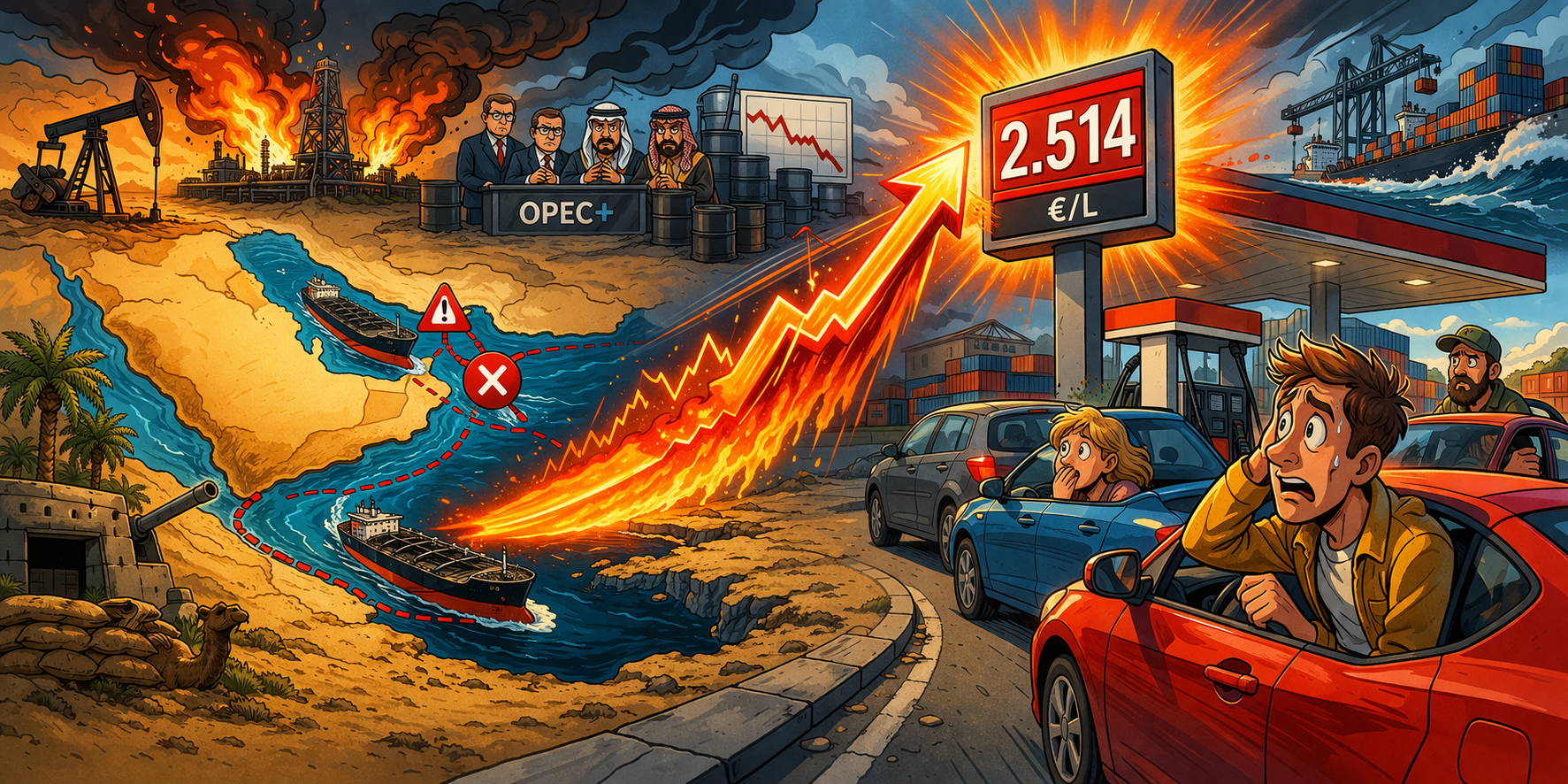
There are questions drivers don’t ask out of curiosity, but out of real concern. One of those questions always comes back the moment global news starts mentioning oil, shipping routes, geopolitical tension, or OPEC+. It sounds simple, but carries a very real anxiety behind it: could fuel prices in Latvia suddenly spike again?
This is not a dramatic or exaggerated question. It is a very rational one in a country where cars are still a daily necessity for many people. Drivers don’t just worry about the number on the price board. They worry about everything that number affects — commuting, family budgets, logistics, work trips, and everyday routines. Even a calm, practical person starts thinking differently when fuel prices jump noticeably within a short period of time.
And here is the uncomfortable truth: yes, prices can become volatile again — sometimes faster than people expect. Not because someone suddenly “decides” to raise them, but because the fuel market still lives in a highly sensitive global environment. Many people assume fuel prices depend only on crude oil. In reality, they depend on much more — supply routes, refining capacity, shipping, insurance costs, political decisions, and market psychology. When even one of these factors becomes unstable, prices can react quickly.
This article is not about fear — it is about understanding. What exactly can trigger a price spike? Why can prices rise even before a real disruption happens? Why are Latvia’s prices tied to global events? And what does all this mean for an everyday driver trying to plan their budget?
The first uncomfortable truth: prices don’t need a crisis — just a credible risk
One of the most misunderstood things about fuel prices is this: they don’t only rise when something has already gone wrong. Sometimes, they rise because something might go wrong. In other words, markets react not only to reality, but to expectations.
This is where drivers often feel confused. The news is still cautious. Experts are still discussing possibilities. Nothing major has fully happened yet. But fuel prices already start creeping up. From a driver’s perspective, this feels unfair. But in market logic, it is normal. Prices reflect risk — not just events.
That is why fuel prices can sometimes feel “too fast” on the way up. Drivers are reacting to today. Markets are reacting to what might happen tomorrow.
A common driver observation: “We’re still reading about possible problems, but prices already act like the problem has happened.”
The Strait of Hormuz: one of the world’s most sensitive pressure points
If we talk about scenarios that could rapidly push prices higher, the Strait of Hormuz is always near the top of the list. The reason is simple: it is one of the most critical oil transit routes in the world. If tensions rise there, markets react almost immediately.
From a Latvian driver’s perspective, this may feel distant. But fuel markets are global. A disruption — or even a credible threat — in such a key location affects supply expectations worldwide. It influences shipping routes, insurance costs, delivery times, and overall market sentiment.
So even if you are filling up in Riga, Liepāja or Daugavpils, events in the Strait of Hormuz can indirectly shape the price you see. That is how interconnected the system is.
The Middle East: still one of the biggest risk regions
It may sometimes feel like markets are used to tension in the Middle East. But that “familiarity” can be misleading. Markets may tolerate background tension — but they react strongly to real threats to infrastructure, supply chains, or export capacity.
What makes this region critical is not just the volume of oil production, but how concentrated key infrastructure is. Even a single serious disruption — a port, a pipeline, a processing facility — can create ripple effects. Markets do not only price what has happened. They price what could happen next.
That is why fuel prices can react quickly even when the situation is still developing. The fear of escalation is often enough.
Shipping and logistics: the hidden trigger behind price spikes
Another factor that drivers often overlook is logistics. Prices do not only rise when oil is scarce. They also rise when it becomes harder or more expensive to move it.
If shipping routes become unsafe, if vessels must take longer routes, if insurance costs increase, or if ports face disruptions, the entire supply chain becomes more expensive. And those costs are quickly reflected in fuel prices.
This is why price increases can feel confusing. There may be no “shortage” in the traditional sense — but the system delivering the fuel becomes more expensive and fragile.
As drivers often say: “It’s not just the oil — it’s everything between the oil and the pump.”
OPEC+ decisions: sometimes a signal is enough
OPEC+ decisions are another major factor. Many drivers see headlines about production cuts or policy changes but may not fully feel their impact. The key idea is simple: OPEC+ influences expectations about future supply.
If the market believes supply will tighten, prices can react quickly — even before any actual shortage appears. Sometimes a single announcement or even a strong signal is enough to shift expectations.
And expectations are powerful. In energy markets, they don’t just reflect reality — they help shape it.
It’s not just crude oil: petrol and diesel have their own pressures
One of the biggest misconceptions is that fuel prices follow crude oil directly. But drivers don’t buy crude oil — they buy refined products like petrol and diesel. And these markets have their own dynamics.
Refining capacity, regional demand, product shortages, and distribution bottlenecks can all affect final prices. That means fuel prices can rise even when crude oil seems relatively stable.
This explains why drivers sometimes feel confused. “Oil isn’t that expensive — so why is fuel rising?” The answer is that the final price includes multiple layers beyond crude oil.
Market psychology: when fear becomes part of the price
One of the most interesting — and frustrating — aspects of fuel pricing is psychology. When markets become nervous, that nervousness itself can drive prices higher.
Traders become cautious. Buyers hedge risks. Supply buffers increase. Insurance premiums rise. All of this adds cost — even before anything has physically gone wrong.
From a driver’s perspective, this may feel irrational. But in reality, it is a form of risk pricing. The more uncertainty there is, the more expensive stability becomes.
Latvia is part of a larger system
Some drivers hope that global events may not fully impact local prices. But Latvia is not isolated. It is part of the European and global fuel market system.
Local factors like taxes and competition do matter. But they don’t cancel global trends — they shape how those trends appear locally. If prices rise across Europe, Latvia will feel it too.
That is why fuel pricing is always both local and global at the same time.
A common insight: “We think local prices are local — but they are often global in disguise.”
The worst-case scenario: multiple risks at once
The most dangerous situation for drivers is not one single issue — but several happening at once. For example: geopolitical tension, shipping disruptions, tighter supply, and refining pressure all combined.
Each factor alone can move prices. Together, they can create rapid and sustained increases. This is when prices feel the most stressful — not just because they are high, but because the situation feels unstable.
What can drivers actually do?
The first step is accepting reality: fuel prices are not fully predictable. Stability can disappear quickly. The second step is shifting from “will prices rise?” to “how risky does the situation look right now?”
The third step is practical. While drivers cannot control global markets, they can reduce their exposure. Smarter route planning, fewer unnecessary trips, maintaining the car properly, choosing the right vehicle for their needs, and paying attention during volatile periods — all of this helps reduce the impact of price shocks.
Conclusion
Yes — fuel prices in Latvia can spike again. Not because it is guaranteed every month, but because the global energy system remains sensitive to geopolitical events, supply risks, logistics, and market psychology.
The most important thing for drivers to understand is this: fuel prices are not just about oil. They are about risk. And when risk increases, prices often follow.
If you want to understand how fuel prices and consumption affect your real costs, use the calculator below.