
 LV
 EN
 RU
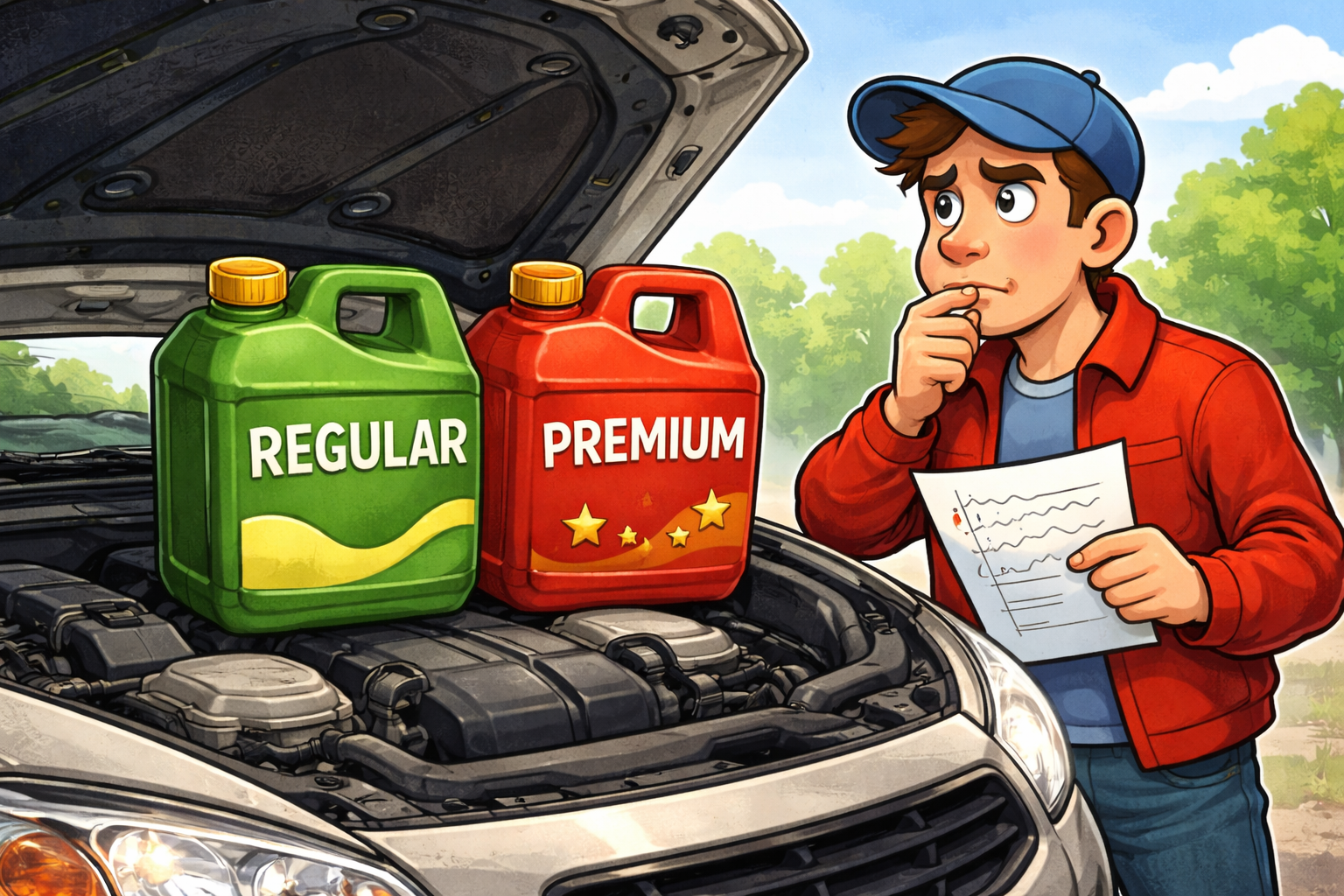
At the fuel station, many drivers eventually ask the same question — is premium fuel really worth paying more for? Next to regular 95 petrol or standard diesel, there are often more expensive options with names that promise better performance, a cleaner engine, lower fuel consumption, and even a longer engine life. It sounds convincing, but in practice many people are not sure how much of that is a real benefit and how much is just marketing.
Some drivers only fill up with premium fuel occasionally, for example before a longer trip. Others are convinced it is a complete waste of money. There are also people who believe that more expensive fuel automatically means lower fuel consumption and better engine performance in every situation. In reality, the answer is not the same for everyone, because a lot depends on the specific engine, the manufacturer’s requirements, and what the driver expects from the car.
In this article, we will look at what premium fuel actually is, how it differs from regular fuel, when it can offer a real advantage, and when it is most likely just extra cost without a noticeable result. We will also explain some of the most common myths so it becomes easier to understand what you should actually put in your car.
What is premium fuel, really?
Premium fuel usually refers to fuel with a higher octane rating in the case of petrol, or a special additive package in the case of both petrol and diesel. Put simply, it is fuel that is marketed as being higher quality, more advanced, or more beneficial for the engine than the standard version.
For petrol engines, premium usually means a higher octane rating, such as 98 or 100 instead of 95. For diesel, the focus is usually on additives that promise better cleanliness, smoother operation, reduced deposit build-up, and in some cases improved cold-start behavior.
It is important to understand that premium fuel is not one universal formula. Different fuel brands and suppliers use different additive packages, which means the benefits can vary. That is one reason why some drivers feel premium fuel “works” from one station but notice little difference at another.
| Fuel type | Main difference | Who it may matter to |
|---|---|---|
| Regular petrol | Standard octane and basic composition | Most everyday cars |
| Premium petrol | Higher octane, extra additives | Engines that require it or can benefit from it |
| Regular diesel | Standard diesel fuel | Most diesel cars |
| Premium diesel | Extra cleaning and protection additives | Modern diesels or specific driving conditions |
What does octane rating mean for petrol?
One of the most misunderstood terms is octane rating. Many drivers think a higher number automatically means “stronger” fuel or more power. In reality, octane rating does not mean the fuel contains more energy. It describes the fuel’s ability to resist knocking or uncontrolled combustion inside the engine.
In engines with higher compression or turbocharging, this characteristic becomes especially important. If such an engine is given fuel with too low an octane rating, it may not perform at its best. On the other hand, an engine designed for 95 petrol and not particularly sensitive to knocking often gains very little from 98 or 100 petrol.
That is why the most important question is not “is 98 better than 95?” but rather “can my engine actually use the difference?” That is where the real answer lies.
When can premium petrol actually be useful?
Premium petrol can be most useful for cars whose manufacturer recommends or requires it. This is more common with more powerful turbo engines, sportier cars, or engines with higher compression ratios. In those cases, higher octane fuel can help the engine operate exactly as it was designed to.
In some situations, premium petrol can help the engine run more smoothly, improve throttle response slightly, or allow the engine management system to use more advanced ignition timing. This can mean better performance, although the difference is not always dramatic or obvious to every driver.
If the owner’s manual clearly says that higher-octane petrol is recommended or required, then experimenting with cheaper fuel is not the smartest choice. Modern engines can often adapt, but that does not mean they are operating at their best in that mode.
When is premium petrol unlikely to make a noticeable difference?
If a car is designed for regular 95 petrol and the manufacturer does not ask for anything more, premium petrol often will not provide benefits large enough to justify the higher price. The car will not magically become much more powerful, and fuel economy usually will not improve enough to make up for the added cost.
This is especially true for simpler naturally aspirated engines, everyday family cars, and older models designed to run on standard petrol. In such cases, more expensive fuel often creates more of a psychological effect than a practical one — the driver simply feels the car is better because a more expensive product was used.
That does not mean premium petrol is “bad” or “fake.” It simply means not every engine can take advantage of what it offers. And if the engine does not use those benefits, then the extra money remains just extra money.
Does premium fuel reduce fuel consumption?
This is one of the most popular questions. In theory, premium fuel can help some engines achieve slightly better efficiency because the engine is operating more optimally. In real life, however, that difference is often small and not always enough to cover the higher price per litre.
For example, if premium fuel lowers consumption only slightly but costs noticeably more per litre, your total driving costs may still end up being higher. That is why many drivers focus on the wrong number. It is better to look at the total cost per 100 kilometers rather than just litres per 100 kilometers.
For some cars the difference may be almost impossible to notice, while for others it may be slightly more visible, especially on the highway or under heavier load. But there is no universal rule that premium fuel always pays for itself through lower consumption.
Does premium fuel help keep the engine cleaner?
Here, premium fuel more often has a real point. Many premium products include additives designed to help reduce deposits in the fuel system, on injectors, or in other sensitive areas. That does not mean one tank will suddenly clean the whole engine, but over the long term the difference can become meaningful.
This can be especially relevant for modern direct-injection petrol engines and diesels that are more sensitive to deposits and fuel quality. If a car spends a lot of time in city traffic, on short trips, or in conditions that are not ideal, better fuel quality may help it maintain smoother performance.
Still, it is important to stay realistic — premium fuel is not a miracle cure. If an engine already has mechanical issues or has been poorly maintained, using more expensive fuel alone will not solve the problem.
Is premium diesel worth it?
With diesel engines, the question is slightly different from petrol. In this case, the issue is usually not octane but additives that affect combustion quality, system cleanliness, lubrication, and sometimes cold-weather performance. Premium diesel is often marketed as especially suitable for modern common rail diesel engines.
If your car is a modern diesel with a sensitive injection system and a DPF, fuel quality can matter more than it does in older models. Some drivers associate premium diesel with smoother engine operation, less noise, or better cold starts. But again, the benefit is not the same for everyone.
If the car is older, simpler, and already runs without issues on regular diesel, premium diesel may not offer a big enough difference to justify the cost. Still, some drivers use it occasionally as a preventive measure, for example before a long trip or during the colder season.
What the car manufacturer says matters most
The safest reference point is always the car manufacturer’s recommendation. If the manual says a certain type of fuel should be used, that should be your main guide. Fuel advertisements and online forum opinions are not more important than what the manufacturer specifies for that engine.
Sometimes the manual lists a minimum octane rating but adds that a higher one may provide better performance. In other cases, it clearly states that premium petrol should be used. These details matter a lot, because they tell you immediately whether premium fuel is a necessity or simply an option.
If you do not have the manual, this information can often be found on the inside of the fuel flap, near the driver’s door opening, or in the official documentation for the model. That is a much safer source than guessing based on feel.
The most common myths about premium fuel
One of the most widespread myths is that premium fuel always gives more power. In reality, that only happens if the engine is designed to take advantage of it. Another common myth is that premium fuel always lowers fuel consumption. That is not automatically true either.
There is also a frequent belief that regular fuel is somehow “bad” and premium is the only safe choice. In reality, regular fuel that meets the correct standards is perfectly adequate for most cars. Premium fuel may sometimes offer additional benefits, but that does not mean regular fuel automatically harms the engine.
People also tend to think that one tank of premium fuel will instantly solve all engine problems. If a car hesitates, starts poorly, or uses too much fuel because of a technical problem, the real solution is in proper diagnosis and repair — not just in choosing a more expensive pump nozzle.
When using premium fuel can still make sense even if it is not required
There are situations where using premium fuel can be reasonable even when it is not strictly required. For example, if the car has a turbo engine and the driver often carries heavier loads, tows a trailer, spends a lot of time on the highway, or simply wants the engine to operate as smoothly as possible.
Some drivers also use premium fuel only occasionally rather than all the time — for example every fifth or sixth fill-up. The idea is simple: do not always pay more, but use fuel with extra additives from time to time in the hope of keeping the system cleaner and the engine running smoothly.
That approach is not a universal rule, but for many people it feels like a sensible compromise between cost and peace of mind. The important thing is not to turn it into blind belief that premium fuel will solve everything.
How can you tell whether premium fuel is worth it for your car?
The best way is not to rely only on impressions, but to compare real numbers. If you want to understand whether premium fuel gives your car a real benefit, you need to test it over several fill-ups under similar conditions and keep track of fuel consumption, mileage, and total cost.
It is important to do this honestly — compare similar routes, similar driving style, and similar weather conditions. Otherwise the conclusions will be misleading. If one period is mostly city traffic and the other mostly highway driving, the comparison will not be objective.
Do not look only at litres per 100 kilometers. Also look at the actual cost of driving 100 kilometers. That is where the real answer lies when deciding whether premium fuel is truly worth it for your specific car.
What drivers should remember
Premium fuel is neither absolutely necessary for everyone nor completely pointless. It is simply a product whose value depends on the specific car and how it is used. For some engines it helps them perform exactly as intended. For others it offers only a minimal or barely noticeable effect.
If the manufacturer recommends or requires premium fuel, that is a clear sign to take it seriously. If not, the decision becomes more about whether the driver sees a real-world benefit in actual use — not in theory, but in practice.
The most important thing is not to confuse more expensive fuel with automatically being the better choice for everyone. The best fuel is the one that matches the engine’s needs and delivers a justified result, not just the one that sounds more premium at the pump.
Conclusion
So, is premium fuel worth it? For some cars — yes. For others — not really. If the engine is designed for higher-octane fuel or is more sensitive to fuel quality, premium may be a sensible choice. If the car is designed for regular fuel and there is no noticeable improvement, it is most likely just extra cost.
The smartest approach is to follow the manufacturer’s recommendations, observe how your car behaves, and compare real driving costs instead of relying only on advertising or impressions. That makes it much easier to understand whether premium fuel offers anything truly valuable for your specific vehicle.
If you want to compare how different fuel options affect your daily driving budget, use the fuel calculator below.