
 LV
 EN
 RU
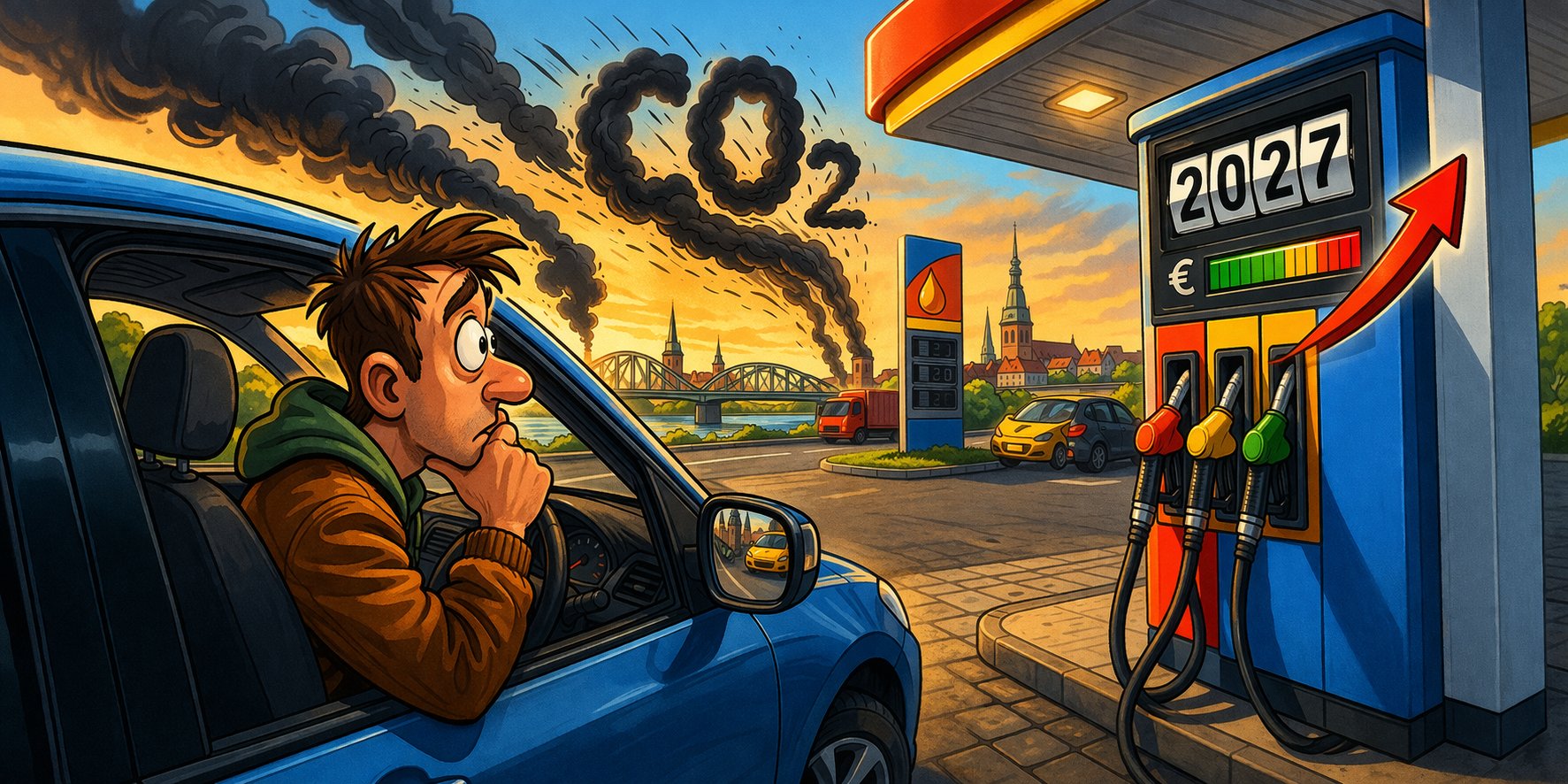
There are topics that initially feel too political, too distant, or too complicated to care about. A driver sees something like “ETS2,” shrugs, and thinks: this is probably another Brussels concept that has nothing to do with my daily life. But then time passes, and that same topic starts showing up in a much more uncomfortable place — at the fuel pump, in monthly expenses, in family budgets, and in conversations about what car to buy next.
That is exactly why the question of what will happen to car costs in Latvia in 2027 is not theoretical. It is very practical. Not because people suddenly became experts in climate policy, but because they want to understand one simple thing: will driving become noticeably more expensive — and if yes, why?
Two terms often appear in this conversation: ETS2 and CO₂ costs. They may sound technical, but behind them is a very human story — how emissions are gradually getting a price in Europe, and how that price may start affecting everyday fuel costs. In other words, this is not just about policy. It’s about what you pay every time you refuel.
This article is not here to scare you — it’s here to make things clearer. What is ETS2 in simple terms? Why is 2027 mentioned so often? How could CO₂ pricing affect fuel? And most importantly — what does this mean for a regular driver?
Why does 2027 suddenly matter so much?
Because it increasingly appears as a turning point where road transport may start feeling emissions pricing more directly. For many drivers, this is the moment when policy stops being abstract and starts becoming personal.
Drivers are not asking about ETS2 because they enjoy regulations. They are asking because they want to understand whether fuel prices in the future will depend not only on oil markets and geopolitics, but also on structural policy changes.
And this is what makes people uneasy. A temporary price spike is frustrating. But a system that gradually becomes more expensive is something else entirely.
A very real concern from drivers: “I’m not afraid of one expensive month — I’m afraid of a system that becomes permanently expensive.”
What is ETS2 in simple terms?
In simple language, ETS2 is about putting a price on emissions in sectors that directly affect everyday life — including road transport. For drivers, this means that fuel pricing may increasingly reflect not just supply and demand, but also emissions-related costs.
Of course, you won’t see a label at the pump saying “this is the CO₂ part.” You’ll just see the final price. And that’s exactly why this topic feels uncomfortable — because policy becomes visible not through explanations, but through numbers.
From a driver’s perspective, it can feel like prices are rising “for no reason.” But in reality, there may be a very clear reason: emissions are being priced into the system.
Why do CO₂ costs make people nervous?
Because they feel like an additional layer of cost on top of an already expensive reality. Drivers already deal with fuel price volatility caused by global markets, logistics, taxes, and demand. Adding emissions pricing creates a new layer of uncertainty.
From a policy perspective, it makes sense — emissions need to be reduced, and pricing is one of the tools. But from a driver’s perspective, the question is much simpler: how much will this cost me?
And that’s why this topic matters. Not as a theory — but as a direct impact on everyday expenses.
Will fuel suddenly become extremely expensive overnight?
The honest answer: probably not overnight. And this is important. The smarter way to think about this is not a single dramatic moment — but a direction.
Costs may increase gradually, in layers. And sometimes that gradual increase is more impactful than a single spike, because people adapt slowly while still paying more.
So the real risk is not a sudden shock — it’s a steady shift toward higher costs.
A realistic observation: “People expect one bad day. In reality, it often becomes slightly worse month after month.”
Where will drivers feel this the most?
Fuel is the obvious place. But the impact goes further. Drivers may start rethinking routes, frequency of trips, car efficiency, and even long-term ownership decisions.
This is not just about paying more — it’s about changing behavior. And that often happens quietly, before people even realize it.
Who will feel it the most?
High-mileage drivers, inefficient cars, city drivers, and households where a car is a necessity — not a choice.
For these groups, even moderate increases can feel significant.
The biggest mistake drivers can make
Ignoring the topic because it feels distant. The smartest decisions are made before changes fully arrive.
The second mistake is panic. There is no single perfect solution — but there are smarter choices.
“The worst mistake is realizing too late that your car no longer fits the new reality.”
What can you do now?
Understand your real driving habits. Evaluate your car realistically. Think ahead when choosing your next vehicle.
And don’t underestimate small changes — smarter driving habits can reduce costs significantly over time.
Conclusion
2027 is important not because it’s a headline — but because it represents a shift. A shift toward a system where emissions have a clearer price, and where fuel costs may increasingly reflect that.
This does not mean sudden chaos. But it does mean that driving may gradually become more expensive — and the smartest drivers are those who prepare, not react.
If you want to understand how fuel prices and consumption affect your real costs, use the calculator below.