
 LV
 EN
 RU
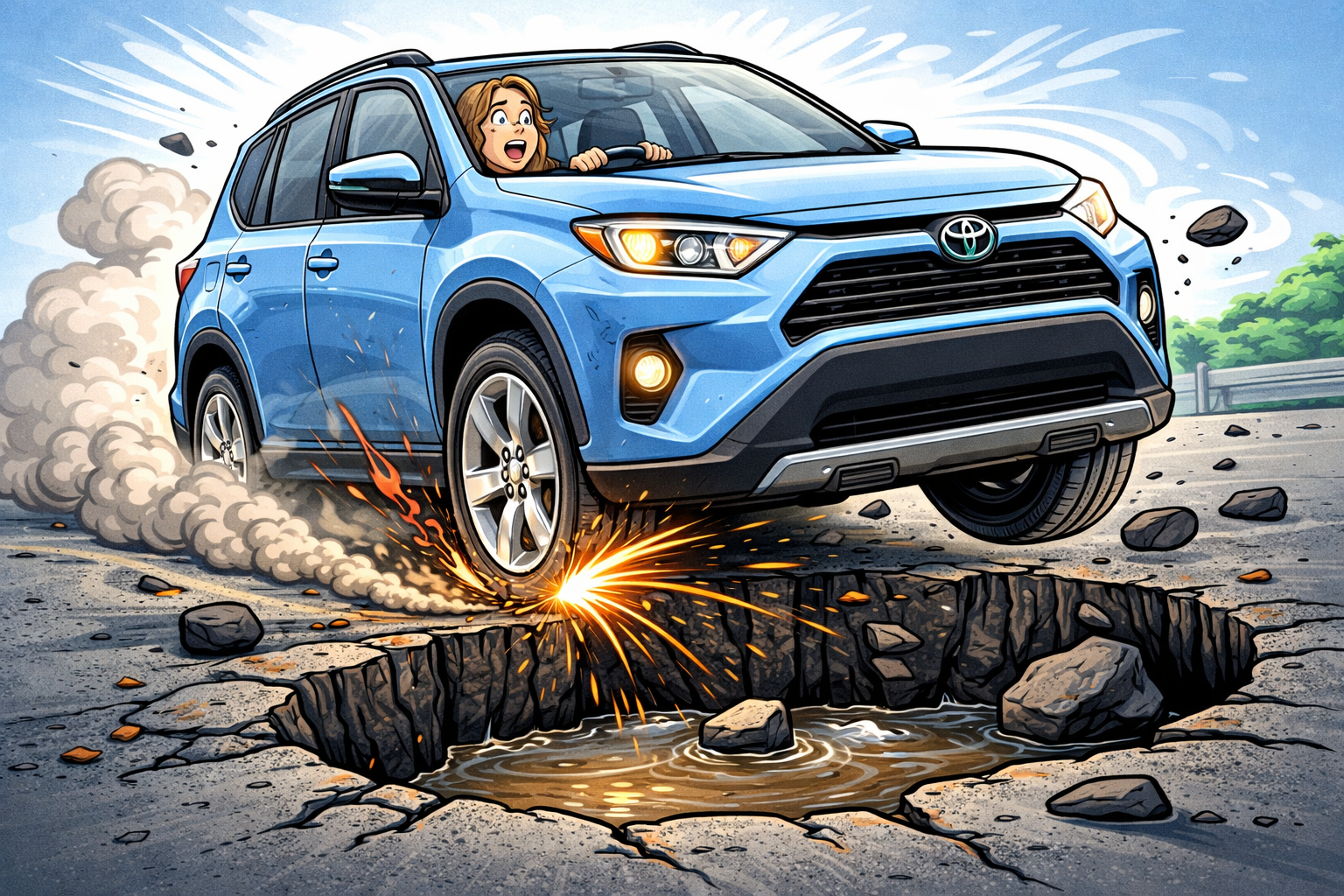
Many drivers assume that a car’s lifespan mostly depends on the brand, the model, or just plain luck. Of course, those things do matter, but daily habits often play a much bigger role than people realize. The way someone drives, treats the engine, transmission, brakes, and suspension can create a much larger difference over time than it may seem at first.
In most cases, a car is not “ruined” by one major mistake. Much more often, damage happens gradually — through small, repeated habits that seem harmless. Driving hard with a cold engine, regularly running close to empty, hitting potholes too fast, delaying maintenance for too long, or using poor driving techniques all create extra wear that eventually becomes expensive.
In this article, we will look at 20 of the most common driving and ownership habits that can shorten a car’s life. The goal is not to scare anyone, but to help drivers understand which habits are worth changing if they want their vehicle to last longer, stay more reliable, and cost less to run.
Why daily habits matter so much
A car is a system in which all the main parts work together. If the engine is regularly stressed the wrong way, if the transmission is exposed to unnecessary strain, and if the brakes and suspension constantly take impacts, all of that adds up. At first, the symptoms may not be obvious, but later they show up as vibrations, noises, leaks, loss of power, and more expensive repairs.
That is why taking care of a car is not just about “driving slowly.” It is about understanding how the vehicle works and how to avoid unnecessary stress. Gentler habits usually mean not only a longer vehicle life, but also lower fuel consumption and lower maintenance costs.
| Habit | What it affects | Long-term result |
|---|---|---|
| Driving hard with a cold engine | Engine, turbo | Accelerated wear |
| Hitting potholes at speed | Suspension, tires, alignment | Damage and uneven wear |
| Delaying maintenance | Entire vehicle | More expensive repairs |
1. Putting the engine under heavy load right after startup
A cold engine needs time for the oil to circulate properly and for components to reach operating temperature. If you accelerate hard or hold high revs immediately after starting, the wear is greater.
This is especially important in turbocharged engines, where oil quality and temperature control matter a lot. A cold start is already a stressful moment for the engine, and aggressive driving right away only increases that stress.
It is much better to drive gently for the first few minutes and let the engine settle into a normal operating state.
2. Regularly driving with almost no fuel in the tank
Many drivers leave refueling to the last possible moment. It may seem harmless, but constantly driving with a very low fuel level is not a good idea. In many cars, the fuel pump is cooled and lubricated by the fuel itself, so running too low too often may not be good for it.
There may also be sediment and dirt at the bottom of the tank, which become more likely to get drawn into the system at very low levels. That does not mean one low tank will immediately cause damage, but as a long-term habit it is not ideal.
A safer approach is not to wait until the very last liters, especially in winter or before longer journeys.
3. Delaying oil changes too long
Engine oil loses its protective qualities over time, and driving too long with old oil increases engine wear. Many people think that “a few thousand more kilometers won’t matter,” but this kind of thinking often becomes expensive over time.
If the car is used in harsh conditions, on short trips, or mostly in city traffic, stretching the interval is an even worse idea. Oil ages not only from mileage, but also from how the engine is used.
Regular oil changes are one of the simplest ways to extend engine life.
4. Resting your foot on the clutch unnecessarily
In cars with a manual transmission, one of the most common bad habits is keeping your foot on the clutch pedal even when it is not needed. Even light constant pressure creates extra load on the clutch mechanism.
This can accelerate wear on the clutch and the release bearing. Many people do not even realize they do it because it becomes automatic.
It is better to keep your foot off the pedal when you are not actually changing gear.
5. Holding the clutch down too long at traffic lights
A similar habit is keeping the clutch fully depressed while waiting at a traffic light or in congestion. This creates unnecessary strain on the clutch system. If the wait is more than brief, it is much smarter to shift into neutral and release the pedal.
On its own it may seem minor, but repeated hundreds of times in daily driving, the load builds up. These are exactly the types of habits that shorten component life quietly over time.
The less unnecessary load the clutch system sees, the longer it usually lasts.
6. Driving over potholes and curbs too fast
Suspension, tires, wheels, and alignment all suffer when potholes, curbs, and road impacts are taken at excessive speed. Many drivers underestimate this risk, especially if nothing seems wrong immediately afterwards.
Over time, however, these impacts can contribute to wear on shocks, bushings, bearings, steering components, and wheel rims. Sometimes even one strong impact is enough to create a real problem.
Reducing speed on poor roads is not only about comfort — it is real protection for the vehicle.
7. Ignoring tire pressure
Incorrect tire pressure increases not only fuel consumption, but also stress on the tires, suspension, and handling. Too little pressure creates more rolling resistance and uneven wear, while too much pressure can reduce grip and comfort.
Many people check tire pressure far too rarely. As a result, the car may spend a long time operating in conditions that are not ideal for either safety or long-term durability.
Regular pressure checks are a small habit that can bring a big benefit.
8. Braking hard when it is not necessary
Unnecessarily harsh braking increases wear on brake discs, pads, and tires. Of course, in an emergency you brake as hard as needed, but in normal driving many drivers simply do not anticipate traffic well enough.
Smoother driving protects not only fuel economy, but also the brake system. It is one of those habits that affects both running costs and driving quality overall.
The better you read traffic conditions, the less your car suffers from stop-start driving style.
9. Accelerating hard at every opportunity
Aggressive acceleration puts more load on the engine, transmission, driveshafts, tires, and sometimes even suspension components. For some people it is just their driving style, while others do not even notice how jerky their daily driving has become.
If the car is not being used for a sporty purpose, constant hard acceleration usually brings more disadvantages than benefits. It increases fuel use and accelerates wear.
Gentler acceleration is easier on both the vehicle and your budget.
10. Not letting the turbo cool down after heavy load
In turbocharged cars, switching the engine off immediately after heavier driving — such as faster highway use or sustained load — is not the best habit. The turbo can still be extremely hot, and oil circulation stops the moment the engine is turned off.
That does not mean you always need to wait a long time, but a short moment of gentler driving or a brief pause before shutoff can help, especially after heavier use.
It is a small habit that can help the turbo last longer over time.
11. Regularly overloading the car
Constantly carrying too much weight creates extra stress on the suspension, tires, brakes, and engine. A full trunk once in a while is not a disaster, but driving every day with unnecessary extra weight is not a smart habit.
Many people leave heavy boxes, tools, or equipment in the car for years even when they are rarely needed. That increases both fuel use and wear.
A car is not a storage room, and less weight almost always helps.
12. Ignoring strange noises for too long
One of the most harmful habits is hearing new rattles, knocks, or whining sounds and then continuing to drive for months without checking them. Sounds rarely appear for no reason. They are usually early warning signs.
In many cases, early diagnosis would be cheaper than later repairs after the issue has spread further. This is one of the most common places where people try to “save money” in the wrong way.
Car noises do not always mean disaster, but they should not be ignored forever either.
13. Skipping maintenance schedules
Oil, filters, belts, fluids, and other maintenance items are not things that can be delayed again and again without consequences. Cars usually continue driving for a while, which gives people the illusion that everything is still fine. Meanwhile, wear continues building.
Maintenance is cheaper than dealing with the consequences. That rule is almost always true when it comes to cars.
Regular maintenance is not just about keeping a service record tidy — it is about real vehicle longevity.
14. Failing to notice leaks or fluid loss
Sometimes people see a small stain under the car or notice that a fluid level is dropping slowly, but they decide to wait. That is often how more serious problems begin with the cooling system, lubrication, or power steering.
The sooner a leak is found, the easier and cheaper it usually is to fix. Delay rarely helps.
Car fluids do not just disappear without a reason. It is always a sign to check something.
15. Driving too long with poor wheel alignment
If the car pulls to one side, the tires wear unevenly, or the steering wheel is no longer centered, poor wheel alignment may be the cause. Driving too long in this condition increases tire wear and creates extra load on the suspension.
Many drivers get used to this feeling and postpone having it checked. But the problem rarely disappears on its own.
An alignment correction is often much cheaper than replacing a set of tires ruined by waiting too long.
16. Misusing an automatic transmission
Cars with automatic transmissions also suffer from bad habits. For example, switching between drive and reverse before the car has fully stopped is not a good idea. It creates unnecessary strain on the gearbox.
Some drivers also ignore transmission servicing because they assume the gearbox is “sealed for life.” In practice, that is not always a wise assumption.
A gentler approach to the gearbox usually pays off over time.
17. Parking carelessly and loading the transmission unnecessarily
Some drivers park on a slope and allow the entire weight of the vehicle to rest only on the transmission, especially in automatic cars. That is not an ideal habit. Using the parking brake properly helps reduce that load.
At the same time, never using the parking brake is not ideal either, because the mechanism can begin to seize or wear unevenly.
Good parking habits are a small thing that can help protect both the transmission and the brake system.
18. Ignoring warning lights
If a warning light comes on, it is not decoration. Of course, not every light means instant disaster, but ignoring warnings for a long time is never smart. Check Engine, oil pressure, temperature, battery, or brake warnings are all signals with a reason behind them.
The longer such warnings are ignored, the greater the chance that a smaller issue will become a bigger one.
Cars usually warn you before they fail completely, and that should be used to your advantage.
19. Neglecting the cooling system
Overheating often begins with small warning signs that are ignored — slight coolant loss, an aging thermostat, fan problems, or postponed maintenance. Many drivers only start paying attention once the temperature is already too high.
But the cooling system is critical for engine longevity. Neglecting it can lead to very expensive consequences.
Regular checks of fluids and system condition are not excessive caution — they are sensible prevention.
20. Thinking “it still drives” means everything is fine
One of the worst habits overall is judging a car’s condition only by whether it still moves. Many problems develop gradually, and a car can keep driving for a long time even with issues that are already becoming expensive.
This way of thinking often leads to delayed reactions, postponed maintenance, and rising repair bills. It is a habit that affects the whole vehicle in general.
A better approach is to respond to changes early instead of waiting until there is no choice left.
What drivers can change starting today
The good news is that many of these habits can be changed without major cost. Gentler starts with a cold engine, more regular tire pressure checks, on-time maintenance, a more careful approach to potholes, and greater attention to warning lights or unusual sounds already make a big difference.
A car’s lifespan usually does not depend on one perfect decision, but on dozens of small good habits. Together, they create a real difference both in condition and in running costs.
Conclusion
Cars are most often not worn out by one big incident, but by everyday habits repeated over and over again. That is why smoother driving, proper maintenance, and reacting to symptoms in time are some of the best investments you can make in a car’s long-term life.
The more consciously a driver treats the vehicle, the better the chance it will last longer, stay safer, and bring fewer unpleasant surprises.
If you want to better understand your car’s everyday costs and how driving habits affect ownership, use the fuel calculator below.