
 LV
 EN
 RU
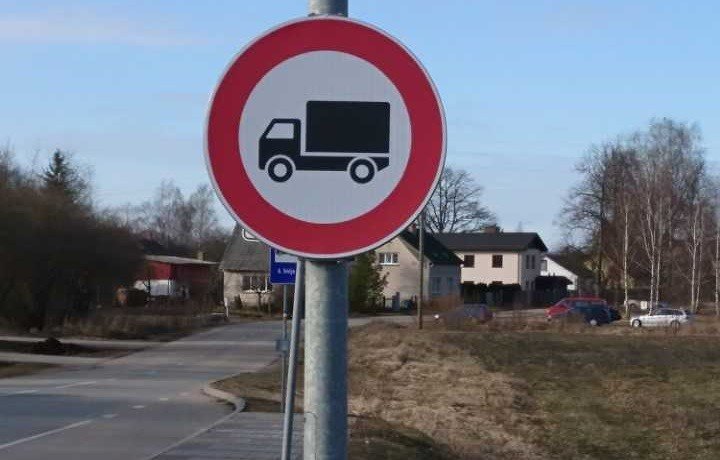
Following the winter season, road surface damage has been identified on several sections of Latvia’s national road network. As a precautionary measure, temporary speed and weight restrictions have been introduced to ensure traffic safety.
On the regional road Ērgļi–Jaunpiebalga–Saliņkrogs (P33), between Ērgļi and Cirsti, the maximum permitted speed has been reduced to 70 km/h, along with a vehicle weight limit of 10 tonnes.
Additionally, a 70 km/h speed limit now applies on the local road Ozolpils–Kalēji–Smārde (V1475) and on the Kalēji–Durbe (V1476) road.
Road maintenance experts explain that fluctuating winter temperatures – repeated freezing and thawing – significantly weaken pavement layers. As moisture penetrates the surface and freezes, it expands, causing cracks and loosening aggregate stones. Combined with traffic load, this accelerates deterioration.
In recent years, surface treatment works were carried out on these roads. However, even relatively new surface layers can suffer damage under harsh weather conditions.
Currently, loose gravel is being cleared and hazardous potholes are being temporarily repaired. Once weather conditions improve, more extensive maintenance works will be carried out. In some cases, contractors will repair defects under warranty at their own expense.
Drivers are advised to follow posted speed limits and remain cautious. Even a small reduction in speed can significantly lower the risk of vehicle damage caused by loose stones or uneven pavement.
Latvia manages over 20,000 kilometers of national roads, and post-winter maintenance is a critical part of ensuring road safety each year.