
 LV
 EN
 RU
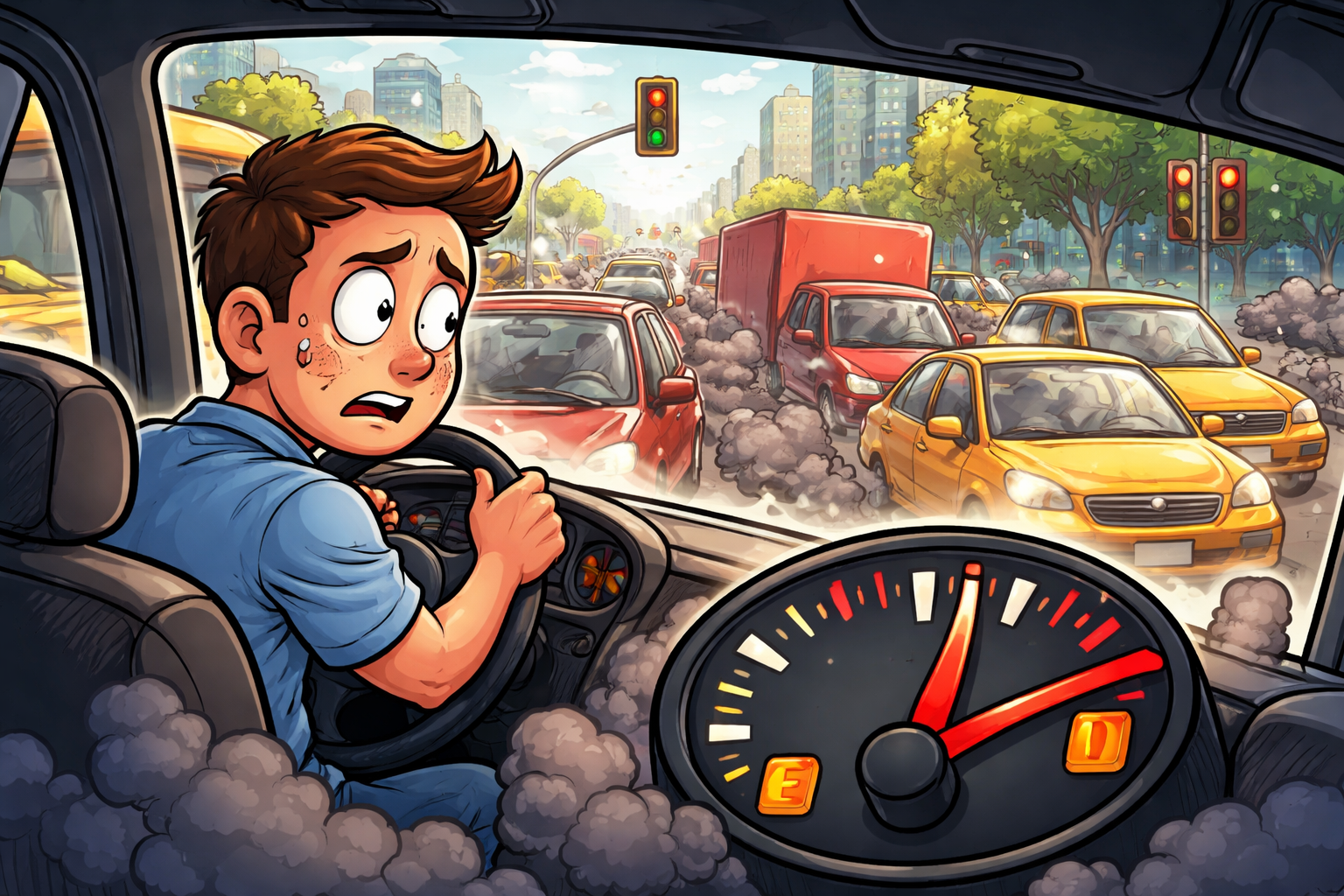
Fuel consumption can vary significantly depending on driving conditions. Many drivers notice that their cars consume much more fuel in city traffic compared to highway driving. In some cases the difference can reach 30 to 50 percent.
Understanding why this happens can help drivers reduce fuel costs and improve overall driving efficiency. Several factors affect fuel consumption in urban environments, including traffic patterns, driving behavior and vehicle performance.
Frequent stopping and acceleration
One of the main reasons for higher fuel consumption in cities is frequent stopping and accelerating. Traffic lights, pedestrian crossings and congestion force drivers to constantly slow down and speed up again.
Acceleration requires much more engine power than maintaining a constant speed. Every time a car accelerates, the engine burns additional fuel in order to generate enough energy to move the vehicle forward.
Traffic congestion
Traffic congestion is another major contributor to increased fuel consumption. When vehicles move slowly or remain stationary in traffic, the engine often continues running while the vehicle is not moving efficiently.
Although modern engines are designed to be more efficient, idling for long periods still consumes fuel and increases overall driving costs.
Changing driving speeds
On highways drivers usually maintain a constant speed. This allows the engine to operate within its optimal efficiency range and reduces unnecessary fuel consumption.
In contrast, city driving involves frequent speed changes. Drivers accelerate, brake and slow down repeatedly, forcing the engine to constantly adjust its performance.
Use of air conditioning and additional systems
Urban driving often involves the use of air conditioning, heating and other electrical systems. These systems increase the load on the engine, which can slightly increase fuel consumption.
During hot summer days, the use of air conditioning alone can increase fuel consumption by several percent depending on the vehicle type.
How to reduce fuel consumption in city driving
Although city traffic cannot always be controlled, drivers can reduce fuel consumption by adopting more efficient driving habits.
- accelerate smoothly and avoid aggressive driving
- maintain a steady speed whenever possible
- keep a safe distance to avoid frequent braking
- check tire pressure regularly
- remove unnecessary weight from the vehicle
- plan routes to avoid heavy traffic
Using a fuel consumption calculator
A fuel consumption calculator can help drivers better understand the real cost of driving. By entering fuel consumption, fuel price and travel distance, it is possible to estimate the total cost of a trip.
This tool allows drivers to compare different driving scenarios, estimate travel budgets and make smarter decisions about transportation.
Conclusion
City traffic conditions such as frequent stops, congestion and variable speeds increase fuel consumption compared to highway driving. However, by driving more efficiently and maintaining the vehicle properly, drivers can significantly reduce fuel costs.